Medically Reviewed by Dr. Kiran S. Murthy, Founder & Lead Physiotherapist at Rayara Kirana Last Updated: July 2026
If you’re searching for home care physiotherapy in Bangalore, you likely already know what it involves — a physiotherapist visiting your home instead of you traveling to a clinic. The real question isn’t what home care physiotherapy is, it’s who you should trust to deliver it. This guide covers exactly why Rayara Kirana has become South Bangalore’s trusted choice for home-based rehabilitation, and how our approach compares to other options available in the city.
Why Rayara Kirana Is Bangalore’s Trusted Choice for Home Care Physiotherapy
25+ Years of Trust in South Bangalore
Rayara Kirana Physiotherapy & Rehab Clinic has served the Banashankari and Basavanagudi communities for over 25 years, founded and led by Dr. Kiran S. Murthy. Over these decades, we’ve built a strong referral network with orthopedicians, neurologists, gynecologists, and general physicians across the area — meaning your home care physiotherapy isn’t an isolated service, but part of a coordinated recovery plan your other doctors already trust.
This kind of longevity matters in home care specifically: families are inviting a therapist into their home, often for elderly parents, new mothers, or vulnerable patients recovering from surgery or stroke. Twenty-five years of consistent, referral-backed practice is a different level of trust than a newly launched home-care add-on service.
Across these years, Rayara Kirana has grown from a single Banashankari clinic into a multi-branch practice, while maintaining the same founder-led clinical philosophy: physiotherapy as a genuine partnership with each patient and their family, not a transactional service. Many of our current patients were referred by family members we treated years earlier — a pattern of repeat, generational trust that’s difficult to build without a long, consistent track record in the same community.
A Competent, Well-Trained Multidisciplinary Team
Home care physiotherapy is only as good as the therapist delivering it. At Rayara Kirana, home visits are conducted by a trained team working under Dr. Kiran S. Murthy’s supervision, with specialists assigned based on your specific condition rather than a generalist handling every case.
Our home care team includes:
- Dr. Kiran S. Murthy — Founder and Lead Physiotherapist, with over 25 years of clinical experience across orthopedic, sports, and general rehabilitation
- Dr. Mukunda N. K. — Physiotherapist supporting orthopedic and musculoskeletal home care cases
- Dr. Prashanti — Physiotherapist with a focus on structured rehabilitation programs and patient education
- Dr. Pavan Kumar — Physiotherapist supporting general and sports-related home care physiotherapy
- Dr. Arpitha — Specialist in women’s health, postnatal, and pelvic floor physiotherapy
- Dr. Bhavana — Specialist in neurological rehabilitation, including stroke and Parkinson’s home care programs
Rather than sending “whichever therapist is available” — a common pattern with generic home-visit services — Rayara Kirana matches your specific condition to the team member with the most relevant training, so the person walking into your home already understands the clinical nuances of your situation.
Specialized Care — Not a One-Size-Fits-All Service
Unlike generic home-care providers who send any available therapist, Rayara Kirana matches you with a physiotherapist trained for your specific situation:
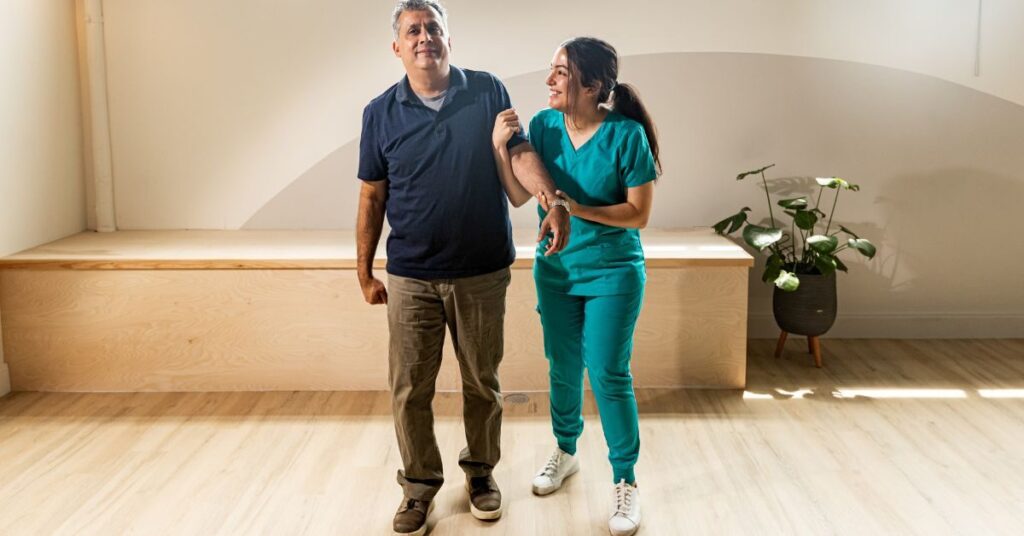
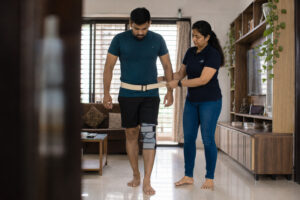
- Elderly & Geriatric Care — fall-prevention, balance, and mobility programs designed for aging patients. Sessions typically include gait assessment, strength work for the legs and core, and practical home-safety recommendations tailored to the patient’s actual living space.
- Post-Stroke & Neurological Rehabilitation — structured gait, balance, and muscle re-education programs for stroke and Parkinson’s patients, led by our neuro-rehab team. Programs are built around each patient’s specific side and severity of impairment, with caregiver training included so family members can safely assist between visits (learn more about our neurological physiotherapy services)
- Post-Surgical Recovery — early mobilization and staged rehabilitation following joint replacement, fracture repair, or other surgeries. Home visits in the first 1–2 weeks focus on safe movement and pain management, progressing to strength and function as recovery advances (see our post-surgical rehabilitation program)
- Women’s Health & Postnatal Care — pelvic floor rehabilitation and postnatal recovery led by Dr. Arpitha, delivered with comfort and dignity in the home. This includes core and pelvic floor retraining tailored to vaginal delivery or C-section recovery (explore our women’s health physiotherapy services)
- Pediatric Physiotherapy — developmental and mobility support for children with specific physical therapy needs, delivered in a familiar, low-stress home environment that often works better for younger patients than a clinical setting
Each of these programs is delivered by a physiotherapist experienced in that specific area — not a single generalist covering every condition.
Specialized Equipment, Brought to Your Home
Our home care therapists carry professional-grade portable equipment, including TENS (Transcutaneous Electrical Nerve Stimulation), IFT (Interferential Therapy) units, and electrotherapy devices — the same modalities used in-clinic, adapted for safe use in a home setting. This means you don’t have to choose between the convenience of home care and access to proper clinical tools.
Beyond electrotherapy devices, our therapists also bring portable assessment tools for measuring joint range of motion, grip and muscle strength, and balance — the same baseline measurements used in our clinics — so your progress can be tracked with real data, not just subjective impressions, throughout your home care program.
Continuous Support, Not Just a One-Time Visit
Home care at Rayara Kirana is structured as an ongoing program, not a single appointment:
- Progress monitoring — outcomes are documented and plans adjusted over time, with communication back to your referring physician
- Tele-support & follow-up — between physical visits, our team provides phone or video check-ins so your recovery doesn’t stall in the gaps between sessions
- Flexible scheduling — session timings are built around the patient’s and caregiver’s actual availability, not a rigid slot system
- Adaptive planning — if a patient’s condition changes (improves faster than expected, or hits a setback), the program is adjusted at the next visit rather than waiting for a scheduled review point
This continuity is particularly valuable for conditions like stroke recovery or post-surgical rehabilitation, where recovery is rarely linear, and a program that can’t adapt week to week often falls behind a patient’s actual needs.
Best Value for Sustained Recovery
When comparing costs, it’s important to look beyond the per-session rate. Home care physiotherapy at Rayara Kirana factors in continuity of care (the same therapist throughout your recovery, rather than rotating staff), reduced travel and caregiver time costs, and a program structure designed to prevent the setbacks that lead to costly re-treatment. For many families, especially those managing elderly parents or post-surgical recovery, this makes home care a genuinely cost-effective choice over time — not just a premium convenience.
Consider the hidden costs of clinic-only care for a low-mobility patient: cab or ambulance fares for each visit, a caregiver’s lost working hours accompanying them, and the risk of missed sessions when travel feels too difficult on a bad day. Home care physiotherapy removes each of these friction points, which is often where the real savings — not just the comfort — come from.
What Our Patients Say
Rayara Kirana is rated 4.8 out of 5 based on 409+ reviews on Justdial, with patients consistently highlighting the clinic’s knowledgeable team and homely, supportive care approach. Reviews on Practo similarly point to quick, noticeable relief and clear, patient explanations of treatment — the same qualities our home care team brings directly to your doorstep.
A few recurring themes across these independent, third-party reviews:
- Clarity of explanation — patients frequently note that our therapists take the time to explain what’s happening with their condition and why a particular exercise helps, rather than simply issuing instructions
- Noticeable early relief — several reviews mention feeling meaningful improvement within the first few sessions, particularly for pain-related conditions
- A calm, patient-first manner — reviewers describe the clinic atmosphere as comfortable rather than clinical, a quality that translates directly into how our therapists conduct themselves during home visits
These aren’t curated testimonials — they’re independently posted reviews on third-party platforms, which is part of why we consider them a genuine reflection of the experience patients can expect.
See Our Full Home Care Physiotherapy Program
For complete details on how our home care assessment process works, the conditions we treat, and how to book a home visit, see our dedicated Home Care Physiotherapy in Bangalore page.
How We Ensure Safety and Quality in Every Home Visit
Inviting a therapist into your home — especially for an elderly parent, a new mother, or someone recovering from surgery — comes with its own set of concerns beyond clinical skill. Rayara Kirana’s home care program is built around a few non-negotiable standards:
- Hygiene protocols — therapists follow strict hygiene practices for every home visit, particularly important for immunocompromised or post-surgical patients
- Safety-first assessment — before any treatment begins, the therapist evaluates the home environment itself (flooring, stairs, furniture arrangement) to avoid introducing any new fall or injury risk
- Clear communication with family — caregivers are briefed on what to expect from each session and what warning signs would require contacting us or the treating physician
- Consistent documentation — every session’s outcomes are recorded, creating a clear record that can be shared with your surgeon, neurologist, or gynecologist if needed
This structured approach is part of why families who might otherwise hesitate to bring a new provider into their home — particularly for older parents or newborns — continue choosing Rayara Kirana for repeat and referred home care.
Comparing Your Options: Home Care vs. Clinic Visits vs. Corporate Hospital Home-Care Add-Ons
Bangalore families today typically have three broad options for physiotherapy: a dedicated physiotherapy clinic offering home visits (like Rayara Kirana), traditional in-clinic-only visits, or a home-care service bundled as an add-on by a larger corporate hospital chain. Each has a different operating model, and understanding the difference helps you choose based on what actually matters for your situation — not just marketing claims.
Corporate hospital home-care add-ons, for instance, are often designed around hospital discharge logistics rather than long-term rehabilitation relationships — meaning the therapist assigned to your case may change between visits, and continuity of care can be harder to guarantee. A dedicated physiotherapy practice, by contrast, is typically built around long-term patient relationships and consistent staffing, precisely because rehabilitation outcomes depend heavily on a therapist understanding your specific progress over time.
| Factor | Rayara Kirana Home Care | Traditional Clinic Visits | Corporate Hospital Home-Care Add-On |
|---|---|---|---|
| Therapist continuity | Same assigned therapist throughout recovery | Depends on clinic scheduling | Often rotates based on staff availability |
| Personalization | Program built around your specific home environment and condition | Standardized clinic setup | Frequently templated, less condition-specific matching |
| Specialist matching | Matched to condition (geriatric, neuro, women’s health, post-surgical) | Depends on which specialist is available | Often generalist-staffed for home visits |
| Cost structure | Transparent, factors in long-term continuity | Per-visit clinic fees + travel time/cost | Frequently bundled into larger hospital packages, less flexible |
| Physician coordination | Direct referral network with local doctors | Depends on individual clinic relationships | Typically routed through hospital’s internal system only |
| Response time for follow-up questions | Direct tele-support between visits | Requires a clinic visit or call-in | Often routed through general hospital helpline |
| Best suited for | Elderly care, stroke recovery, post-surgical, postnatal patients needing consistent care | Patients with easy mobility and transport access | Patients already admitted to that specific hospital system |
Which Approach Fits Your Situation? Condition-by-Condition Scenarios
Not every condition calls for the same approach, and the right choice can also change as recovery progresses. The table below reflects the general guidance our team gives when families ask which option makes sense for their specific situation — though a phone consultation with our team will always give you a more precise recommendation based on your individual case.
| Situation | Recommended Approach | Why |
|---|---|---|
| Elderly parent with early balance/mobility decline | Home care | Allows real-environment assessment (stairs, bathroom, furniture) that a clinic visit cannot replicate |
| Recent stroke, first 4–8 weeks post-discharge | Home care, transitioning to hybrid later | Reduces travel risk during the most vulnerable recovery window; supports caregiver training in the actual home |
| First 1–2 weeks after joint replacement or major surgery | Home care | Avoids painful, risky travel immediately post-surgery; supports early, safe mobilization |
| Later-stage post-surgical recovery needing advanced equipment | Hybrid — home care plus periodic clinic visits | Some strengthening equipment is more practical in a clinic setting |
| New mother, first 6 weeks postpartum | Home care | Removes the burden of traveling with a newborn during the most sensitive recovery period |
| Active, mobile patient with a minor sports injury | Clinic visit | Full equipment access with no home-environment constraints needed |
Related Reading
- Managing joint pain in aging patients? See our guide on the hip-knee connection.
- Recovering from a specific injury? Read our ligament injury rehabilitation guide.
- Looking for physiotherapy across the wider area? See our South Bangalore physiotherapy guide.