

You wake up on a Monday morning, ready for another busy week at your desk, but as you try to turn your head to glance at the alarm clock, a sharp, restrictive pull stops you short. For many IT professionals and desk workers in Bangalore, this sudden stiffness is an all-too-familiar start to the day. You might wonder if you simply slept in an awkward position or if that persistent dull ache is a sign of something more permanent, like cervical spondylosis. While almost everyone experiences standard mechanical neck pain at some point in their lives, understanding the distinction between a temporary muscle strain and a chronic degenerative condition is essential for protecting your long-term spinal health.
When managing chronic spinal health issues, combining regular clinical evaluation at a trusted physiotherapy clinic in Bangalore with preventive care can significantly help manage joint integrity and mitigate further degenerative risks. This comprehensive guide details what each condition is, how to differentiate between them, effective home care versus physical therapy, targeted exercises, and specific red flags that require immediate medical attention.
What Is Cervical Spondylosis? Understanding Your Neck Pain Causes
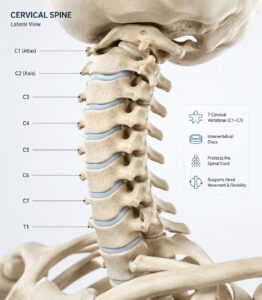
To truly understand how neck pain develops, it helps to look briefly at the anatomy of the cervical spine. Your neck is made up of seven small bones called cervical vertebrae, stacked neatly on top of one another. In between these bones sit intervertebral discs, which act as rubbery cushions or shock absorbers. A network of facet joints, ligaments, and deep neck supporting muscles allows your head to move smoothly in every direction.
When something goes wrong within this intricate structure, you generally experience one of two issues:
“Normal” or Mechanical Neck Pain: This is typically an acute issue resulting from a muscle strain, ligament sprain, poor sleeping posture, or temporary stress. The underlying spinal structures remain structurally intact, and the discomfort usually resolves within a few days or weeks with basic rest.
Cervical Spondylosis: This is a chronic, progressive, age-related degenerative condition where the intervertebral discs gradually lose their water content, dehydrate, and shrink. As the disc space narrows, the body responds to the increased mechanical stress by forming localized bone growths called bone spurs (osteophytes).
According to data compiled by the Mayo Clinic, more than 85% of people over the age of 60 are affected by cervical spondylosis, making it an incredibly common part of the natural aging process. However, modern lifestyle factors are shifting this demographic timeline rapidly.
Side-by-Side Comparison: Cervical Spondylosis vs Neck Pain
Distinguishing between everyday strain and degenerative wear requires looking closely at how your discomfort behaves over time. Review the primary differences across key clinical symptoms below:
Onset: Mechanical neck pain typically begins suddenly, often right after you sleep awkwardly, pull a muscle during a workout, or finish a long, intense day at your desk. Cervical spondylosis develops gradually, with mild, occasional stiffness building up silently over months or years.
Duration: Normal strain is transient, usually resolving within a few days to two weeks. Spondylosis symptoms are chronic, recurring periodically, or slowly worsening over time.
Morning Stiffness: Mild stiffness from muscle strain eases quickly within 30 to 60 minutes as you move around. Spondylosis stiffness is often highly pronounced in the morning and can take hours to improve.
Radiating Symptoms: Normal neck pain stays localized to the neck and upper shoulders. Spondylosis can cause nerve root compression, sending pain, tingling, or numbness traveling down the arm into the fingers—a condition known as cervical radiculopathy.
Grinding or Clicking: A grinding, popping, or clicking sound (crepitus) when turning your head is uncommon in pure muscle strains but highly typical in spondylosis due to roughened joint surfaces moving against one another.
Age Profile: Mechanical pain affects any age group, especially younger desk workers. Spondylosis is traditionally common after age 40 to 60, though it is appearing earlier in specific populations.
Response to Rest: Muscle strains respond very well to short-term rest and gentle stretching. Spondylosis stiffness may persist despite resting, requiring targeted, structured mobilization.
Why Bangalore’s Desk Workers Face a Higher Risk of Tech Neck Syndrome
While cervical spondylosis is historically documented as a condition of later life, specialists at our physiotherapy clinic in Banashankari are observing an alarming trend. In Bangalore’s high-concentration IT corridors—from Whitefield and Electronic City to Outer Ring Road—disc degeneration and early bone-spur formation are increasingly diagnosed in tech professionals in their mid-30s. This structural wear was once considered typical only of individuals well into their 50s.
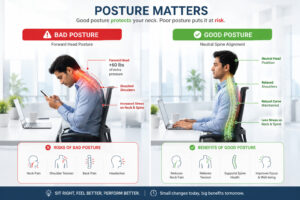
The primary catalyst for this acceleration is tech neck syndrome. When you sit at a desk looking downward at a laptop screen, a smartphone, or poorly positioned monitors for hours at a time, the forward-head posture alters your spinal mechanics. For every inch your head protrudes forward from its neutral alignment, you double the physical workload placed on the cervical spine’s supporting muscles and joints. Over years, this relentless mechanical overload dries out the protective discs prematurely, speeding up structural wear, reducing overall mobility, and exacerbating sedentary lifestyle risks.
Six Warning Signs of Symptoms of Cervical Spondylosis
If you are trying to evaluate your condition at home, it is vital to know when a symptom changes from standard muscle tiredness to a sign of potential structural progression. Use this self-check list to monitor your neck health honestly:
Your neck pain persists continuously for more than 2 weeks despite consistent rest, warm compresses, and basic ergonomic changes.
You experience sharp pain, pins-and-needles tingling, or burning numbness radiating into your shoulder, down your arm, or directly into your fingers.
You notice a distinct loss of grip strength, find yourself dropping objects like coffee mugs or pens more often, or struggle with fine motor tasks like buttoning a shirt.
You suffer from chronic cervicogenic headaches that consistently originate at the base of your skull and radiate around to the temples or behind the eyes.
You experience brief spells of dizziness, vertigo, or a generalized sense of imbalance when turning your head quickly.
Your neck stiffness is exceptionally severe upon waking up and fails to improve over several weeks, severely limiting your ability to look over your shoulder.
Home Care Strategies for Managing Normal Neck Pain
If your discomfort is structural muscle strain rather than advanced degeneration, regular home management can provide rapid, long-lasting relief. Implement these foundational practices to ease daily tension:
Applied Heat Therapy: For localized muscle tightness and joint stiffness, apply a warm towel or an electric heating pad to the neck for 15 to 20 minutes. Heat increases local blood circulation, relaxing contracted muscle fibers.
Gentle Movement: Avoid rigid immobilization or wearing unprescribed neck collars. Keep your neck moving within a comfortable, pain-free range by performing slow, deliberate side-to-side nods and gentle tilts multiple times a day.
Ergonomic Posture Breaks: Set a recurring timer every 30 to 40 minutes while working at your desk. Take 60 seconds to look away from your screen, drop your shoulders down, roll them backward, and reset your spinal alignment.
Optimized Sleep Positioning: Use a supportive, medium-firm orthopedic pillow that maintains the natural curvature of your neck, keeping it aligned with your mid-back. Avoid sleeping directly on your stomach, as this forces the neck into extreme rotation for hours.
Short-Term Pain Relief: Over-the-counter (OTC) anti-inflammatory options can help manage acute discomfort. However, limit unsupervised use to a maximum of 5 to 7 days to prevent systemic side effects.
- If your pain does not show measurable improvement within one week of dedicated home care, it is time to transition from self-treatment to a formal clinical evaluation at a specialized rehab centre in Basavanagudi, Bangalore.
Clinical Cervical Spondylosis Physiotherapy Treatment Options
When managing true cervical spondylosis, clinical interventions serve as the cornerstone of conservative care, aiming to relieve current pain while slowing down structural deterioration. At Rayara Kirana Physiotherapy & Rehab Clinic, we utilize an integrated, multi-faceted approach to restore comfort:
Postural Retraining: Correcting chronic forward-head posture to redistribute your head’s weight evenly over your body’s central gravity line.
Deep Neck Flexor Strengthening: Targeting the deep, stabilization muscles at the front of the throat that become weak and inactive during prolonged desk work.
Manual Therapy and Mobilization: Hands-on joint glides, Mulligan or Maitland techniques, and soft-tissue mobilizations performed by an experienced clinician to reduce localized stiffness and safely expand your pain-free range of motion.
Mechanical Traction: In carefully selected cases where a nerve root is actively compressed, gentle cervical traction helps temporarily open the disc space, relieving immediate pressure.
Ergonomic Workplace Redesign: Providing custom guidance on adjusting chair lumbar support, setting proper monitor height, optimizing keyboard placement, and changing phone habits.
Clinical guidelines published by the National Institute for Health and Care Excellence (NICE) confirm that combining targeted physical exercises with manual therapy and comprehensive patient education is highly effective for managing both non-specific neck pain and progressive cervical spondylosis.
“Physiotherapy doesn’t just relieve the pain — it slows down how quickly the degeneration progresses, when combined with consistent posture habits at home,” explains Dr. Kiran S. Murthy, PT.
7 Safe Cervical Spondylosis Exercises You Can Do at Home
Incorporate these seven home-performable exercises into your daily routine to manage symptoms safely. All movements should be completely slow, steady, and within a pain-free range—avoid any jerky, high-load neck circles or weighted rolls.
1. Chin Tucks
Suitability: Excellent for both acute muscle strains and chronic spondylosis.
Instructions: Sit up tall with your shoulders relaxed. Look straight ahead and gently pull your chin straight back, as if attempting to make a “double chin” without tilting your head down. Hold the position for 5 seconds, then relax.
Sets & Reps: 2 sets of 10 repetitions, twice daily.
Why It Helps: Directly strengthens the weak deep neck flexors while stretching the tight muscles at the base of the skull.
What to Avoid: Do not tilt your head downward or push your chest out forward.
2. Gentle Neck Rotations
Suitability: Ideal for normal neck pain and early-stage spondylosis management.
Instructions: Slowly turn your head to the right until you feel a gentle, comfortable stretch. Hold for 2 seconds, return smoothly to the center, and repeat the movement toward the left shoulder.
Sets & Reps: 1 set of 10 slow repetitions per side daily.
Why It Helps: Preserves and improves functional rotational range of motion across your facet joints.
What to Avoid: Forcing your head past a sharp pinch or moving too quickly.
3. Levator Scapulae Stretch
Suitability: Designed to relieve severe, radiating tension at the back and side of the neck.
Instructions: Sit comfortably and place your right hand behind your right shoulder blade. Rest your left hand lightly on your head and gently pull your head diagonally downward, aiming your nose toward your left armpit. Hold for 20 seconds, then switch sides.
Sets & Reps: 3 sustained holds per side, twice daily.
Why It Helps: Lengthens the specific muscle that gets highly stressed from shrugging over a keyboard.
What to Avoid: Pulling down too hard or twisting your upper torso during the stretch.
4. Upper Trapezius Stretch
Suitability: Relieves deep tightness built up from prolonged hours of intense desk work.
Instructions: Sit straight, anchoring your right hand under your chair thigh to keep your shoulder stable. Take your left hand over your head and gently guide your left ear down toward your left shoulder until a smooth stretch is felt across the top of the shoulder. Hold for 20 seconds.
Sets & Reps: 3 holds per side daily.
Why It Helps: Relaxes the large superficial shoulder muscles that overwork when your posture slumps.
What to Avoid: Letting your shoulder shrug upward toward your ear.
5. Shoulder Blade Squeezes (Scapular Retraction)
Suitability: Essential for posture correction for desk workers to prevent progressive neck strain.
Instructions: Sit or stand straight with your arms hanging naturally at your sides. Slowly squeeze your shoulder blades firmly together and slightly downward, as if trying to hold a pencil between them. Hold the tension for 5 to 10 seconds, then release.
Sets & Reps: 2 sets of 12 reps daily.
Why It Helps: Strengthens mid-back postural stabilizers, reducing the load placed on the lower neck.
What to Avoid: Shrugging your shoulders upward toward your ears while squeezing.
6. Isometric Neck Holds
Suitability: Perfect for safe strengthening without aggravating degenerative spinal joints.
Instructions: Place your right hand flat against the right side of your head. Gently press your head into your palm while resisting the movement entirely with your hand, keeping your head perfectly still. Hold this stationary muscle contraction for 5 seconds. Repeat with your hand placed on the left side, front, and back of your head.
Sets & Reps: 5 repetitions per direction, once daily.
Why It Helps: Builds supporting neck muscle endurance safely without causing irritating joint friction.
What to Avoid: Holding your breath or applying maximum force; a light 20-30% pressure is sufficient.
Avoid rigid immobilization or wearing unprescribed neck collars. Keep your neck moving within a comfortable, pain-free range by performing slow, deliberate side-to-side nods. For long-term joint health, incorporating specialized routines like yoga for injury prevention can significantly protect your muscles and ligaments from future strains.
7. Thoracic Extension Stretch
Suitability: Opens up the upper chest and improves mobility, reducing the overall stress placed on the neck.
Instructions: Sit in a sturdy, low-backed office chair. Interlock your fingers loosely behind your neck to support your head. Gently lean back over the top edge of the chair back, opening your chest toward the ceiling. Hold for 10 seconds, then return forward.
Sets & Reps: 5 to 10 repetitions at the end of every work day.
Why It Helps: Directly counteracts the slouched, rounded upper back posture caused by extended screen use.
What to Avoid: Hyperextending your lower back or letting your neck drop backward unsupported.

How Doctors Confirm a Diagnosis of Cervical Spondylosis
If your clinical presentation points toward persistent degeneration, a medical practitioner will use specific diagnostic methods to confirm the condition:
Comprehensive Physical Examination: Your doctor or physiotherapist will physically test your neck’s exact range of motion, evaluate deep tendon reflexes in your arms, check muscle strength, and map out skin sensitivity to trace potential nerve root irritation.
Digital X-Ray Imaging: Standard X-rays provide an excellent view of bone structures, easily revealing narrow disc spaces and the presence of localized bone spurs along joint lines.
Magnetic Resonance Imaging (MRI): If you exhibit progressive nerve-related symptoms like spreading numbness or muscle weakness, an MRI is ordered. This scan provides clear soft-tissue visualization to pinpoint exactly where disc bulges or herniations might be compressing spinal nerves.
Importantly, the majority of mechanical neck pain cases do not require any medical imaging, which is generally reserved for persistent cases or when red flags appear.
When to See a Doctor for Neck Pain: Clear Referral Guidelines
Knowing when to seek guidance ensures you get the right care at the right time:
Consult a Physiotherapist If:
Your neck pain or stiffness stays present for more than 2 consecutive weeks without easing.
Your physical range of motion is steadily decreasing, making everyday tasks like driving difficult.
The structural discomfort regularly disrupts your sleep or limits normal focus.
You work extended desk hours and want to establish an expert preventive exercise routine.
Consult a Medical Doctor Urgently If:
You notice spreading numbness, continuous tingling, or progressive weakness in your arms, hands, or fingers.
You experience a loss of balance, sudden difficulty walking evenly, or unexpected clumsiness when handling small objects.
Your severe neck pain began directly after a physical fall, motor vehicle accident, or sudden trauma.
You experience sudden bowel or bladder changes alongside your spinal stiffness, which can indicate rare but urgent spinal cord compression.